
A Storied Beginning: The Birth of Arbolada
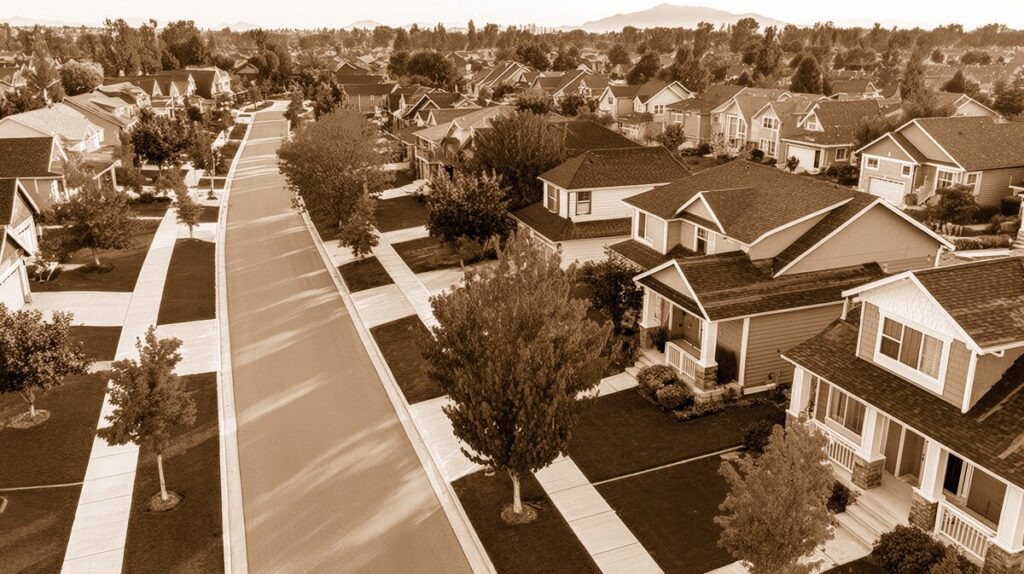
Nestled under a canopy of ancient oaks just west of Ojai Avenue lies one of Ojai’s most beloved and historic neighborhoods: Arbolada. To truly know Ojai, you must wander its winding lanes, greet the sight of sunlight dappling through branches, and appreciate the blend of history, artistry, and natural beauty that defines Arbolada. This neighborhood, whose name comes from the Spanish word for “wooded place,” remains a living testament to Ojai’s vision of harmonious community and the embrace of nature.
From Vision to Reality: J. J. Libbey and the Arbolada Plan
Arbolada’s origins can be traced back to the early 1920s, when philanthropist Edward Drummond Libbey, best known for his glass manufacturing empire, took Ojai under his wing. Libbey’s devotion to creating an idyllic, cultured community flourished after the 1917 Ojai fire when he led the city’s transformation into a Spanish Revival village. He envisioned Arbolada as a residential extension of that mission—a place where beauty, tranquility, and privacy would define daily life.
To realize this dream, Libbey enlisted prominent architect and landscape planner Wallace Neff and renowned landscape architect Ralph D. Cornell. Their vision shaped the landscape between Del Norte Road, Foothill Road, and the gently curving route of Arbolada Road. Together, they wove winding streets, broad lots, and preservation of native oaks into Arbolada’s distinctive layout, quite unlike the grid-like patterns of other California developments of that era.
How Arbolada Got Its Name
The name “Arbolada” is a fitting tribute to the neighborhood’s defining feature: its majestic, sprawling oak trees. “Arbolada” means “wooded grove” in Spanish, perfectly encapsulating the sense of sanctuary created by these towering guardians. From the beginning, strict covenants protected the oaks—a legacy still fiercely honored today.
Landmark Homes and Timeless Architecture
One cannot walk through Arbolada without admiring its architectural treasures. Many of the earliest homes were designed in the Spanish Colonial Revival style, echoing Ojai’s downtown arcade and post office tower. Red-tiled roofs, archways, white stucco, and wrought-iron work dot the landscape from Del Norte Road up to the upper stretches of Aliso Street and Woodland Avenue.
Some notable examples include:
- The original Libbey guest house on Foothill Road, meticulously restored to preserve its 1920s character.
- Homes designed by architects like Austen Pierpont and Mead & Requa, whose subtle flourishes still inspire new residents and architects alike.
- The elegant hand-built stone walls that line streets such as Del Oro Drive, evoking old California charm.
Throughout the decades, Arbolada's homes have sensitively evolved—contemporary residences now harmonize with vintage treasures, all under the watchful shade of the neighborhood’s oaks.
Key Milestones: Growth, Renewal, and Preservation
Arbolada’s history is rich with moments of transformation, community activism, and neighborly pride.
- During the post-war period in the 1950s and 1960s, Arbolada saw modest infill development, but always with respect for the guiding principles of spaciousness and nature.
- In the 1970s, as questions of growth loomed, Arbolada residents banded together to fight for stricter tree preservation ordinances. Their efforts helped shape Ojai’s broader conservation ethos.
- The creation of Libbey Park, just a stone’s throw away, became a natural gathering spot for Arbolada families. Though technically just outside the neighborhood, the park’s presence cemented the community’s reputation as one of Ojai’s greenest and most family-friendly areas.
- In recent decades, the Ojai Valley Land Conservancy and community residents have worked to protect the neighborhood’s delicate balance, ensuring future generations will experience the same tranquility and healthful air.
Arbolada Today: A Neighborhood That Cherishes Its Heritage
Wander beneath the arching boughs along Ayers Avenue or follow the gentle curves of Del Oro Drive, and you’ll notice a living, breathing neighborhood—steeped in tradition, yet always evolving.
Here’s what truly makes Arbolada special today:
- Community Spirit: Longstanding neighbors and newcomers unite in monthly gatherings, garden tours, and holiday celebrations, reinforcing the sense of belonging that Libbey once imagined.
- Hidden Gems: Quiet cul-de-sacs, secret garden paths, and the enchanting chorus of songbirds provide a retreat from modern noise—a rare treasure in Southern California.
- Proximity to Ojai’s Heart: From Arbolada, residents can stroll to Ojai Avenue’s shops, galleries, and Saturday farmers’ market, or connect easily to the Ojai Valley Trail for hiking and biking.
Looking Ahead: A Neighborhood Rooted in Care
The Arbolada stands as a symbol of mindful planning and respect for heritage—a neighborhood shaped by visionaries, nurtured by residents, and celebrated by all who find peace beneath its trees. Ojai may be world-renowned for its “pink moment” sunsets, but ask an Arbolada resident, and they’ll tell you their favorite view is any place where old oaks meet sunlight, connecting past, present, and future in the simplest, most beautiful way.
From Del Norte Road’s stately welcome to the sun-dappled peace of Woodland, Arbolada is more than a neighborhood. It’s a testament to what Ojai has always done best: honor its roots and grow with grace.